
A website can look professional, load quickly, and still fail to convert visitors into leads or customers. The problem is not always design, traffic quality, or pricing. Very often, the problem is a gap between what the business thinks visitors understand and what visitors actually experience.
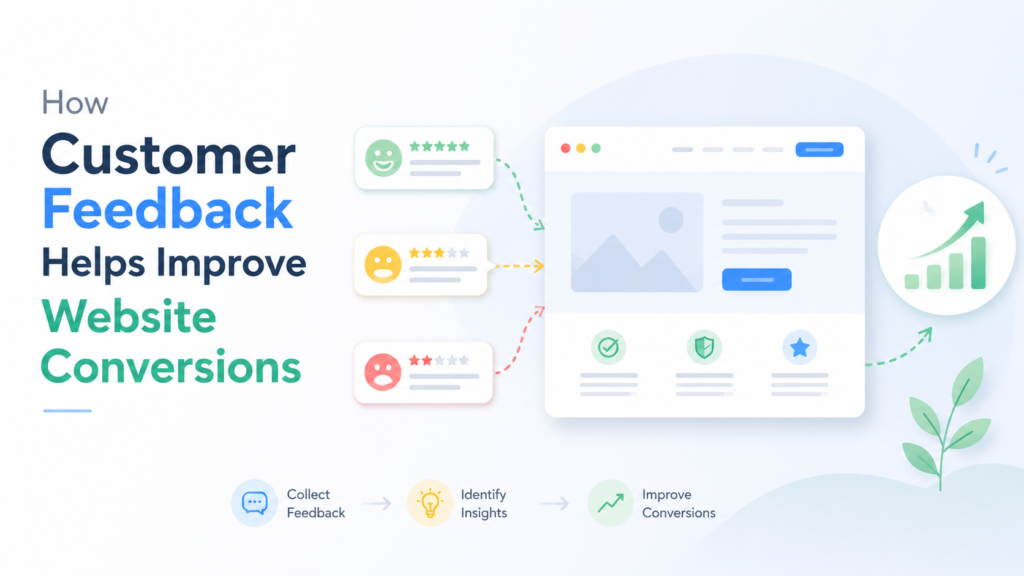
Customer feedback helps close that gap. It shows what people notice, what they do not understand, where they hesitate, and what kind of information they need before taking the next step.
For businesses that want to improve customer experience, website feedback is one of the most practical sources of insight. It turns silent visitor behavior into real answers.
Why Website Analytics Is Not Enough
Website analytics can show what happens on a site. It can show page views, bounce rates, traffic sources, clicks, form submissions, and conversion rates. This information is useful, but it does not always explain why something happens.
For example, analytics may show that many visitors leave a service page without contacting the company. But it cannot fully explain the reason. Did visitors fail to understand the offer? Was the price unclear? Did the page lack trust signals? Was the contact form too long? Did the call to action feel too aggressive?
Customer feedback helps answer these questions. It adds context to the numbers.
A business should not choose between analytics and feedback. The strongest insights usually come from using both. Analytics shows where the issue may be. Feedback helps explain what the issue feels like from the customer’s point of view.
What Website Visitors Need Before They Convert
Before a visitor fills out a form, books a consultation, requests a quote, or makes a purchase, they usually need confidence. This confidence comes from several things.
They need to understand what the business offers. They need to see whether the service fits their situation. They need to trust that the company is real and reliable. They need to know what happens after they take action. They also need to feel that the next step is simple and low-risk.
If any of these elements are unclear, conversion can drop.
A business may believe its website explains everything clearly because the team already knows the service. But new visitors do not have that internal knowledge. They need the page to guide them step by step.
Customer feedback helps reveal where the website fails to do that.
Common Conversion Problems Feedback Can Reveal
Website feedback often uncovers problems that are difficult to see from inside the business.
One common issue is unclear service descriptions. A company may use broad phrases such as “custom solutions” or “strategic support,” but visitors may not understand what that actually means. Feedback can show which parts of the offer need more specific explanation.
Another issue is weak trust-building. Visitors may want to see client examples, reviews, team information, process details, or proof of experience before contacting the company.
A third issue is uncertainty about the next step. If a button says “Get Started,” visitors may wonder what happens after clicking. Will they receive a call? A quote? A sales pitch? A consultation? Clear microcopy can reduce this hesitation.
Feedback can also reveal form problems. A form may ask too many questions too early, request sensitive information, or lack a simple message field. If visitors feel the form is too demanding, they may leave.
How to Collect Useful Website Feedback
Website feedback should be easy for visitors to provide. If the feedback form feels complicated, people will ignore it.
A short survey can work well. It may ask questions such as:
What information were you looking for today?
Was anything unclear on this page?
What almost stopped you from contacting us?
What would make this service easier to understand?
Did you find what you needed?
How confident do you feel about the next step?
The goal is not to ask every possible question. The goal is to collect focused answers that help improve the website.
Businesses can collect feedback from current customers, recent leads, lost leads, website visitors, or people who match the target audience. Each group can reveal something different.
Current customers can explain what helped them decide. Lost leads can explain what created hesitation. Website visitors can point out unclear content before the business notices the issue.
How Feedback Improves Website Copy
Website copy should match the way customers think and speak. Feedback helps businesses understand the words customers use to describe their problems, goals, and objections.
For example, a company may describe a service as “customer journey optimization.” But customers may say, “We need to understand why people leave before booking.” Both phrases may refer to the same problem, but the customer’s wording is often more useful for website copy.
Feedback can also show which benefits matter most. A business may emphasize advanced methods, while customers may care more about clear reporting, faster decisions, or easier communication.
When website copy reflects real customer language, visitors feel understood. This can make the site more persuasive and easier to navigate.
How Feedback Improves Calls to Action
A call to action should feel clear and natural. If visitors are not ready to “Buy Now,” a softer action may work better. For service businesses, options such as “Request a Quote,” “Book a Consultation,” or “Discuss Your Project” may feel more appropriate.
Customer feedback can show whether the current call to action feels too vague, too strong, or simply unclear.
It can also help improve the text around the button. A short sentence explaining what happens next can reduce uncertainty. For example:
“Send us a short message, and we’ll suggest the best next step.”
“Request a consultation to discuss your customer experience goals.”
“Tell us what you want to improve, and we’ll review your request.”
These small changes can make the action feel safer and more understandable.
How Feedback Supports Better Page Structure
A website page should guide visitors in a logical order. If the most important information is hidden too low on the page, users may leave before finding it.
Feedback can show what visitors expected to see first. It can also reveal which sections feel unnecessary, confusing, or missing.
For example, visitors may want to see pricing guidance before testimonials. Or they may want to understand the process before filling out a form. A company may discover that people need more examples, clearer service categories, or a stronger FAQ section.
This makes website improvement more precise. Instead of redesigning the entire site, the business can improve the parts that affect understanding and trust.
Turning Feedback Into Conversion Improvements
Collecting feedback is only useful if the business acts on it. After gathering responses, the next step is to look for repeated patterns.
If several visitors say the offer is unclear, rewrite the service description. If many people ask what happens after submitting the form, add a short explanation near the call to action. If customers say they trusted the company because of reviews, make testimonials more visible. If users mention missing pricing information, consider adding price ranges, packages, or a pricing explanation.
Not every comment should lead to a change. Some feedback may be personal or unrealistic. But repeated feedback from the right audience deserves attention.
The best approach is to make changes, then continue measuring results. Website improvement should be an ongoing process, not a one-time redesign.
Conclusion
Customer feedback helps businesses understand why website visitors convert, hesitate, or leave. It adds human context to analytics and shows what customers need before they feel ready to take action.
For customer experience agencies and growing businesses, website feedback is one of the most direct ways to improve conversions. It can strengthen copy, calls to action, page structure, forms, trust signals, and the overall customer journey.
A better website does not only look better. It answers customer questions more clearly, reduces uncertainty, and makes the next step easier to take.